Blog
Fake Supplement Reviews: How to Spot Them Before You Buy Neuro Recall
Fake supplement reviews tend to look polished and alike: stock-photo faces, matching stories, big round numbers and dramatic memory turnarounds. Since August 2024, an FTC rule bans fake reviews and testimonials, including AI-written ones, and lets the agency seek civil penalties (FTC - Fake reviews final rule). Even genuine testimonials cannot show that a supplement works. That takes controlled trials of the same product and dose (FTC - Health Products Compliance Guidance).
Written by the Neuro Recall label deskUpdated · 8 min read
The problem
Why are memory supplement reviews so often fake?
Memory supplements attract fake reviews because buyers are often worried, and nobody can check a stranger's memory. A glowing story is cheap to write and hard to disprove.
Think about what a memory review claims. "I remember names again." "My husband is his old self." These lines feel personal. They also have no numbers, no dates and no way to confirm them.
Real users face the same limit. Memory changes from week to week with sleep, stress, mood and medicines. Someone who starts a capsule during a calm month may credit the capsule. That is not dishonest. It is just how people read their own lives.
So reviews are useful for some things and weak for others. They can tell you whether a package arrived on time or a capsule was hard to swallow. They cannot tell you what a product does inside the brain.
The law
What does the FTC's 2024 rule say about fake reviews?
The Federal Trade Commission announced a final rule on August 14, 2024. It bans fake reviews and testimonials, buying reviews that must be positive or negative, and insider reviews that hide the connection (FTC - Fake reviews final rule).
| The rule covers | In plain words |
|---|---|
| Fake reviews | Reviews from people who do not exist or did not use the product, and reviews written by AI |
| Paid sentiment | Giving money or free goods in exchange for a review that must say good things, or bad things about a rival |
| Hidden insiders | Owners, managers or staff posting reviews without saying who they are |
| Enforcement | The FTC can seek civil penalties from people who break the rule knowingly |
A separate FTC guide covers health claims. It says testimonials do not replace scientific support, usually randomized trials in people (FTC - Health Products Compliance Guidance). A wall of happy quotes is not evidence under that standard.
Warning signs
What red flags point to a fake supplement review?
The strongest red flags are sameness, polish and drama. One flag alone proves little. Three or four together should make you stop and look harder.
Studio-perfect faces
Even lighting, plain backgrounds and model-like smiles often mean stock photos. Real buyers rarely send headshots.
Same arc, new name
Every review follows one script: doubt, then a few weeks, then a dramatic change. Only the first name and city differ.
Tidy statistics
Exact-looking ratings and order counts with no link to a store or platform you can open yourself.
Disease talk
Lines about reversing dementia or ending nerve pain. A legal supplement label cannot say that, so a "customer" says it instead.
Bursts of praise
Dozens of five-star reviews in a few days, then silence. That pattern often signals a paid push.
Only on the sales page
Quotes that appear nowhere else. A seller's own page chooses what you see.
Disease claims deserve extra care. In 2019 the FDA warned 17 companies over supplements marketed for Alzheimer's (FDA 2019 - 17 companies, Alzheimer's claims). A review that hints at the same promise should worry you, not reassure you.
Photos
How can you tell a review photo is a stock image?
Run a reverse image search. Most phone browsers let you press and hold a picture to search for it. If the same face shows up on a dental site, a mortgage ad and another supplement, it is not a customer.
Save or long-press the photo
Use your browser's "search image" option, or upload it to an image search engine.
Scan the matches
Look for the same face on unrelated sites, or on photo libraries that sell images.
Check the setting
Real customer photos tend to be messy: kitchen counters, odd angles, mixed lighting. Perfect is suspicious.
A real face does not prove a real review, though. Photos can be borrowed from social media. Treat the picture as one clue among several.
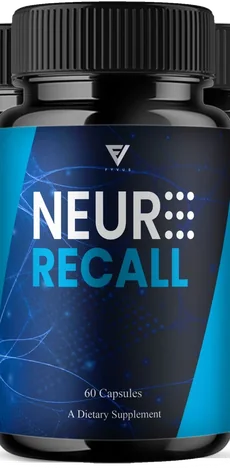
Neuro Recall: 5 bottles for $59.952 capsules a day · about $11.99 a bottle · free standard shipping · seller does not accept returns
View listingOur choice
Why does this site show empty Neuro Recall review slots?
Because we have no verified Neuro Recall reviews to show. The marketing brief we received included a sample star rating, review and order counts, and six named reviewers with face photos. None of that came from checked buyers.
Those faces would trip the first red flag in any list like ours. Publishing them would also put us on the wrong side of the FTC rule (FTC - Fake reviews final rule). So the reviews page shows a blank rating and six empty slots.
A review goes up only if we can tie it to a real order, with the buyer's permission, and show it whether it is kind or critical.
We are the U.S. stocking partner for Neuro Recall and earn money when people buy through our order links. That conflict is exactly why our standards for reviews need to be strict. Our editorial standards spell out the full policy.
What helps
What makes a supplement review worth reading?
A useful review is specific, dated and a little boring. It reads like a note from a neighbor, not an ad.
- Practical details. Capsule size, smell, how the box arrived, whether the seal was intact.
- Honest timing. How long the person took it and how often, in plain numbers.
- Side effects. Upset stomach, headache or nothing at all. Real users mention the downsides.
- Context. Other medicines or changes that happened at the same time.
- Verified purchase. A badge from the store where the order was placed, such as eBay feedback tied to a sale.
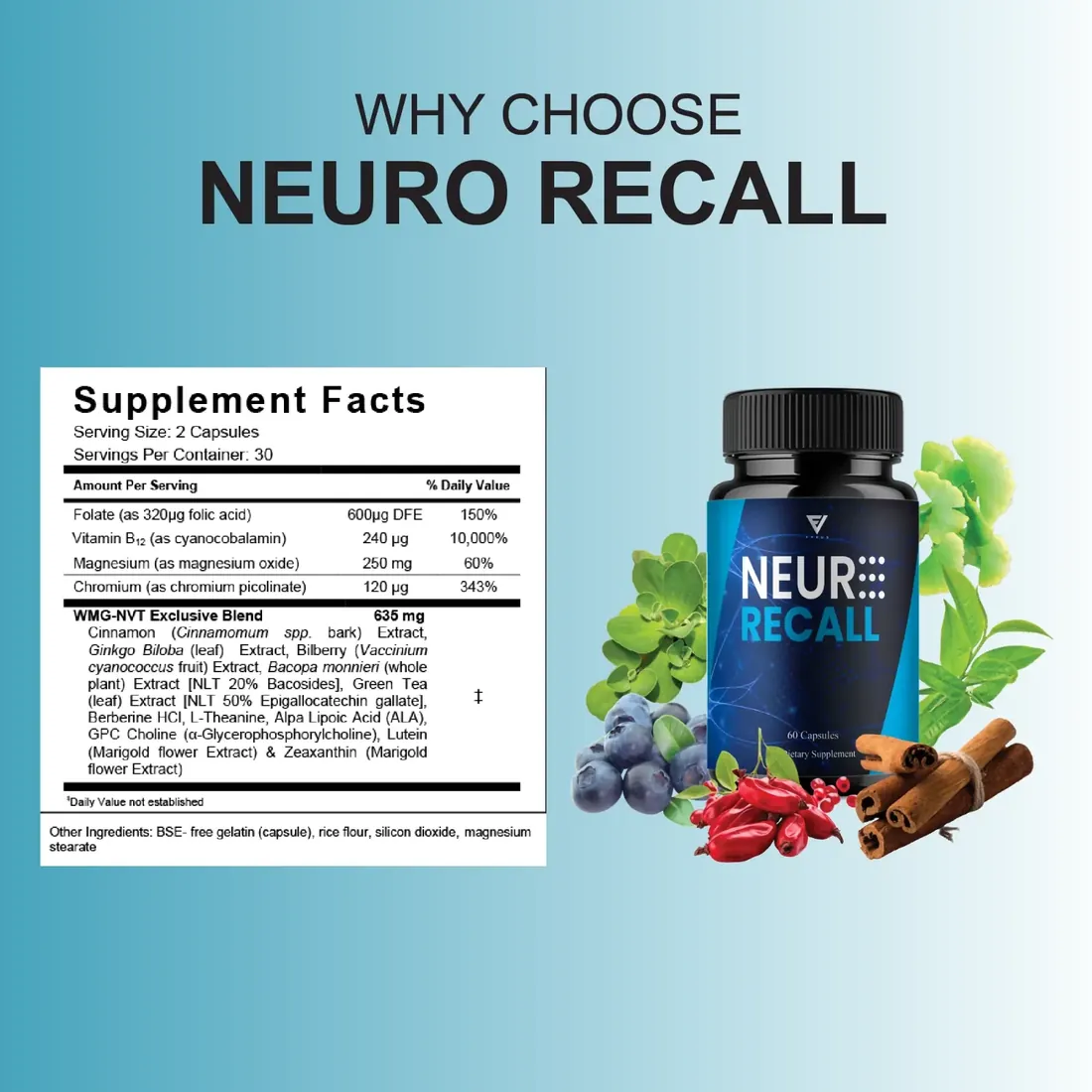
Even a perfect review answers only one question: did this person like it? Whether an ingredient works is a question for trials. For Neuro Recall, our benefits page sets the brand's claims next to that research.
Bottom line
What should you rely on instead of reviews?
Rely on the printed label, the research on each ingredient, the seller's return terms and your own doctor. Reviews come last.
New memory trouble that disrupts daily life needs a medical check, not a product search.
FAQ
Fake review questions
How do you know if supplement reviews are fake?
Watch for clusters of warning signs: stock-photo faces, stories that follow the same script, neat statistics with no source, disease claims and sudden bursts of praise. One sign is a reason to look closer. Several together suggest the reviews were written to sell, not to inform.
Is it illegal to post fake reviews in the U.S.?
Yes. The FTC's final rule, announced August 14, 2024, bans fake reviews and testimonials, AI-written reviews, paying for reviews that must be positive or negative, and hidden insider reviews. The FTC can seek civil penalties from people who break the rule knowingly.
Are there real Neuro Recall reviews?
We have not verified any, so we publish none. The sample rating, counts and named reviewers in the marketing brief were not checked buyers, and the face photos are not customers. Our reviews page keeps empty slots until real, order-linked reviews can be shown.
Can a testimonial prove a memory supplement works?
No. The FTC says health claims need competent and reliable scientific evidence, usually randomized human trials, and testimonials do not substitute for that. Memory also shifts with sleep, stress and medicines, so one person's story cannot isolate a capsule's effect.
How do I check if a reviewer's photo is real?
Run a reverse image search on the photo. If the same face appears on unrelated ads or stock photo sites, it is not a customer. A unique photo is still not proof, since pictures can be copied from social media, so weigh it with other clues.
Are eBay feedback comments more reliable than website reviews?
Often a little, because eBay feedback is tied to a completed sale. It mostly describes shipping, packaging and seller service, though, not health effects. Read the neutral and negative comments too, and remember feedback is about the seller as much as the product.
Should I avoid a supplement with no reviews?
Not automatically. No reviews is better than fake ones. Judge the product on its label, ingredient research, price, return terms and how it fits with your medicines. Ask your doctor or pharmacist if you take prescription drugs.
Are Neuro Recall reviews real?
This site shows no Neuro Recall reviews because none are verified against real orders. Polished reviews with stock photos and matching stories are a red flag, and a testimonial alone cannot show that a supplement works.
What does the FTC fake review rule mean for Neuro Recall?
Since August 2024 an FTC rule bans fake reviews and testimonials, including AI-written ones, and lets the agency seek civil penalties for breaking it. It is one more reason to read supplement reviews with care.
Who wrote this
Written and reviewed by
Pages built from the bottle label, the sales listing and linked NIH, FDA, FTC and peer-reviewed sources.
Last updated . See our editorial standards and how we check reviews. This website is run by a U.S. stocking partner, not by the manufacturer. This site is paid a commission when you order through its links.
Keep reading
More about Neuro Recall
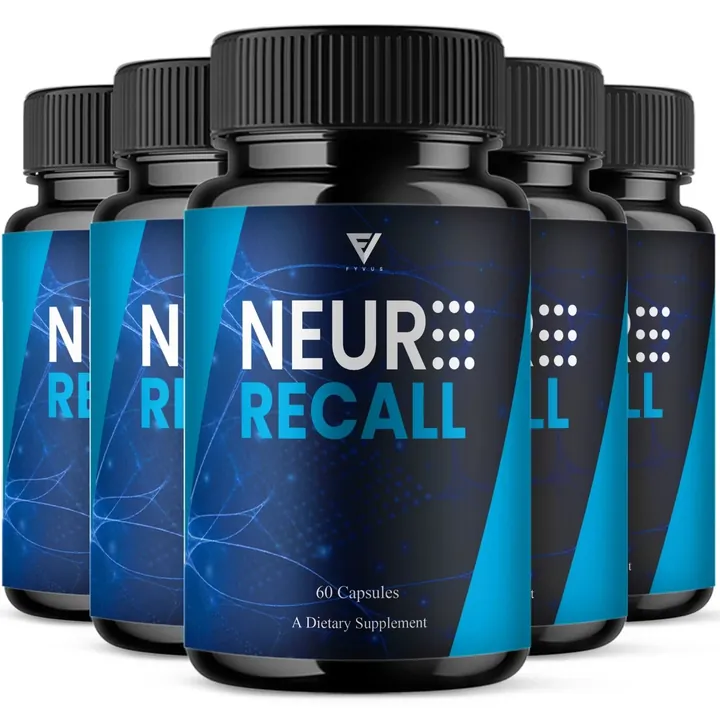
U.S. stocking partner for Neuro Recall
Ready to look at Neuro Recall?
Check the label, your medicines and the return terms first. The listing sells 5-bottle packs; buying more lowers the price per pack.
- Checkout on eBay
- Free standard shipping
- Read the return terms first