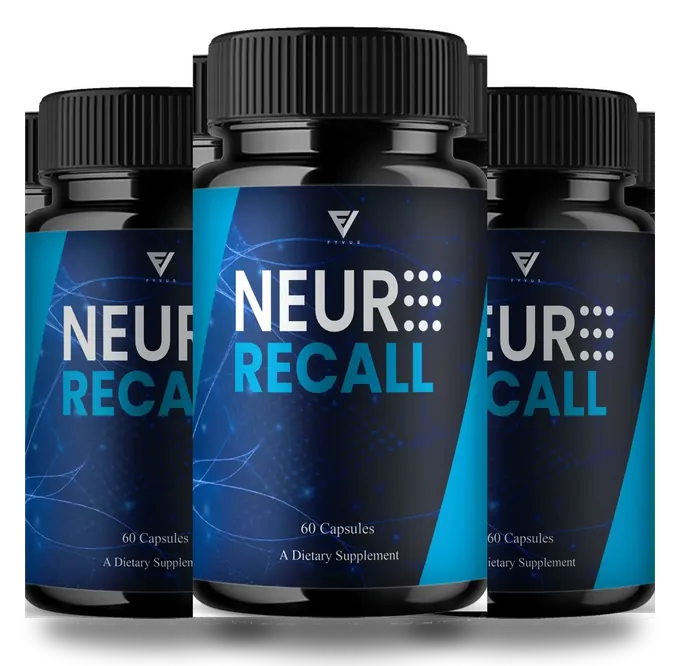
Ingredient profile
ALA, Alpha-GPC, Lutein and Bilberry in Neuro Recall: Small Lines, Big Claims Elsewhere
These are lines 3, 8, 9 and 10 of Neuro Recall's 635 mg blend. ALA can be 79 mg at most, against 600 mg in diabetic nerve trials (MSK - Alpha-lipoic acid). Alpha-GPC can be 71 mg, against 1,200 mg in an Alzheimer's trial (AlzDiscovery - Alpha-GPC review). Lutein did not help thinking in AREDS2 (NEI/NIH - AREDS2 cognition result), and the bilberry species is misprinted.
Written by the Neuro Recall label deskUpdated
The basics
Which label lines does this profile cover?
Four lines from the WMG-NVT Exclusive Blend: bilberry, alpha-lipoic acid (ALA), alpha-GPC, and lutein with zeaxanthin. Each has its own research story, and none was tested in Neuro Recall.
No single amount is printed (21 CFR 101.36 - proprietary blends). ALA is spelled "Alpa" on the label, a simple misspelling. Bilberry carries the wrong Latin name.
| Label name | Bilberry (Vaccinium cyanococcus fruit) Extract |
|---|---|
| What it is | Printed as Vaccinium cyanococcus (blueberry group) |
| Position on the label | Line 3 of 10 in the 635 mg blend (listed by weight) |
| Per 2-capsule serving | Not printed. Blend line 3 of 10, so at most 212 mg |
| Amount used in research | Up to 160 mg a day tolerated |
| Strength of evidence | Not clearly helpful for any condition |
| Marketed use | Berry antioxidants |
| Main caution | The species printed is not the true bilberry. |
| Label name | Alpa Lipoic Acid (ALA) |
|---|---|
| What it is | Antioxidant compound (spelled 'Alpa' on the label) |
| Position on the label | Line 8 of 10 in the 635 mg blend (listed by weight) |
| Per 2-capsule serving | Not printed. Blend line 8 of 10, so at most 79 mg |
| Amount used in research | 600 mg a day in diabetic nerve trials |
| Strength of evidence | Some nerve-symptom relief in diabetes |
| Marketed use | Antioxidant |
| Main caution | Can lower blood sugar; nausea. |
| Label name | GPC Choline (alpha-Glycerophosphorylcholine) |
|---|---|
| What it is | Choline compound |
| Position on the label | Line 9 of 10 in the 635 mg blend (listed by weight) |
| Per 2-capsule serving | Not printed. Blend line 9 of 10, so at most 71 mg |
| Amount used in research | 1,200 mg a day in an Alzheimer's trial |
| Strength of evidence | Not tested in healthy people |
| Marketed use | Choline source |
| Main caution | Linked to higher stroke risk in one observational study (not proof). |
| Label name | Lutein (Marigold flower Extract) & Zeaxanthin (Marigold flower Extract) |
|---|---|
| What it is | Marigold carotenoids |
| Position on the label | Line 10 of 10 in the 635 mg blend (listed by weight) |
| Per 2-capsule serving | Not printed. Blend line 10 of 10, so at most 64 mg |
| Amount used in research | 10 mg + 2 mg for eye disease (AREDS2) |
| Strength of evidence | No effect on cognition in AREDS2 |
| Marketed use | Eye health |
| Main caution | No safety concern found at studied amounts. |
On the label
How much of each can Neuro Recall contain?
Less than the studies used, wherever a study dose exists. Blend lines are listed by weight, so line k can weigh at most 635 divided by k milligrams. These ceilings are our arithmetic, and real amounts are probably lower.
| Label line | Position | Most possible | Amount in research |
|---|---|---|---|
| Bilberry fruit extract | 3 of 10 | 212 mg | Up to 160 mg a day tolerated (NCCIH - Bilberry) |
| Alpha-lipoic acid | 8 of 10 | 79 mg | 600 mg a day in nerve trials (MSK - Alpha-lipoic acid) |
| Alpha-GPC | 9 of 10 | 71 mg | 1,200 mg a day, Alzheimer's trial (AlzDiscovery - Alpha-GPC review) |
| Lutein and zeaxanthin (marigold extract) | 10 of 10 | 64 mg of extract | 10 mg lutein + 2 mg zeaxanthin (NEI - AREDS2 supplements) |
The lutein line looks large, but 64 mg is the weight of marigold extract, not of pure lutein. The label does not give the extract strength.
Alpha-lipoic acid
Does the ALA in Neuro Recall help nerve symptoms?
There is no evidence at this dose. Studies in people with diabetes suggested some relief of nerve symptoms. They used IV or oral doses such as 600 mg a day, and earlier results were mixed (MSK - Alpha-lipoic acid).
Neuro Recall can hold 79 mg at most, about one-eighth of that amount.
ALA can lower blood sugar and may add to diabetes medicines (MSK - Alpha-lipoic acid). Rarely, it has triggered insulin autoimmune syndrome, with about 27 reported cases in people with a genetic risk.
Memory loss that disrupts daily life, or numbness and tingling, deserves a medical check. Diabetes is the leading cause of nerve damage in the feet, and low B12 is another (NINDS - Peripheral neuropathy). See the numbness and tingling guide.
Name vs label
Does Neuro Recall claim to treat nerves or memory?
The label does not. The words "nerve" and "memory" come from the product name, the domain and the eBay title.
- Product nameNeuro RecallSuggests memory and nerves
- Domainneurorecallnerve.comSuggests nerves
- eBay title'Memory Supplement'A memory claim, made by the listing
- Label front'60 Capsules · A Dietary Supplement'No benefit claim
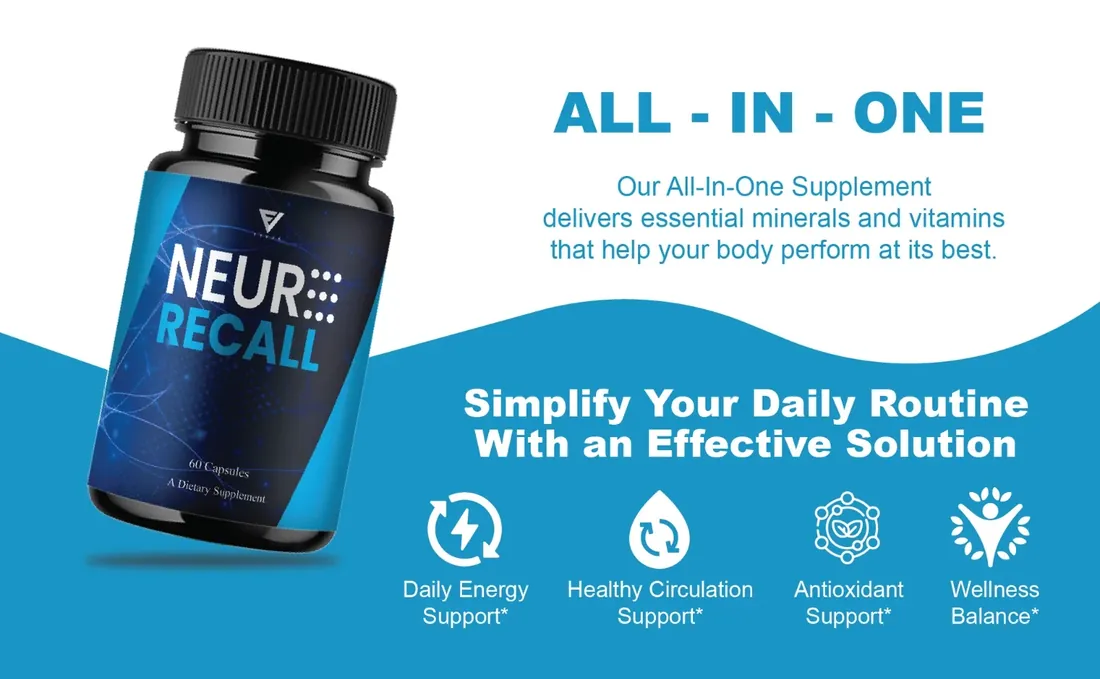
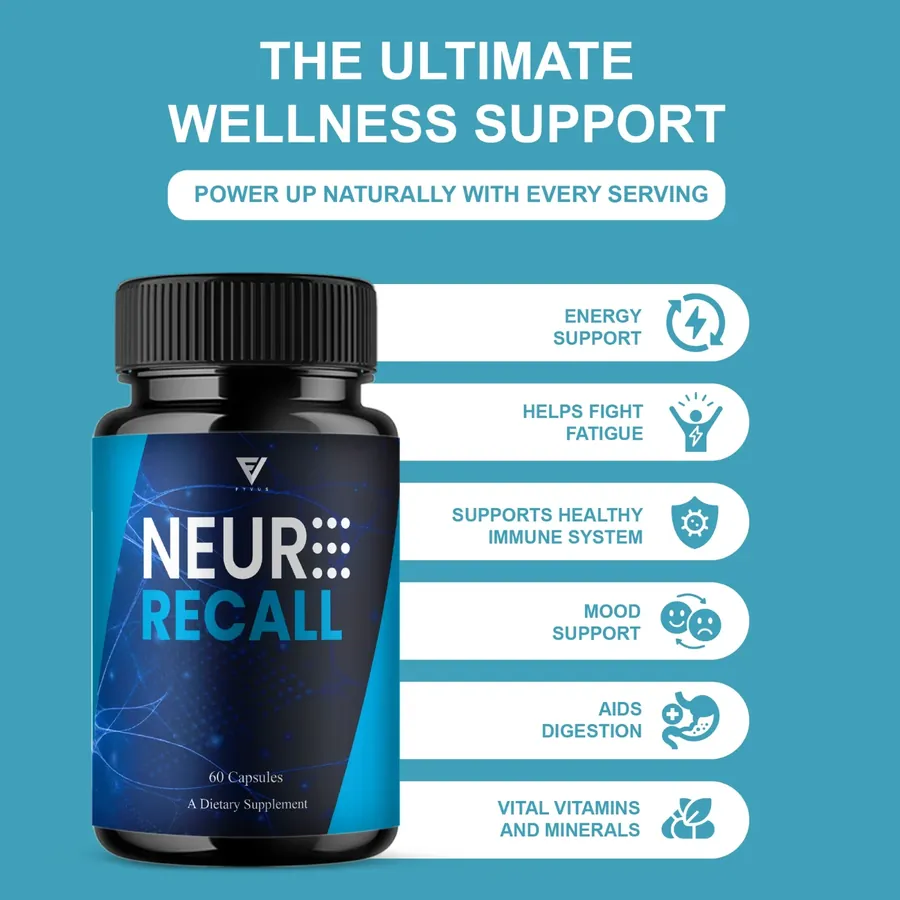
- Brand panelsEnergy, focus, digestion, immune, antioxidants, healthy agingGeneral wellness; each marked with the FDA asterisk
Memory-supplement claims need real evidence: in 2024 a court barred another brand from claiming its product improves memory (FTC - Prevagen ruling statement).
See what the brand panels actually claim, panel by panel.
Neuro Recall: 5 bottles for $59.952 capsules a day · about $11.99 a bottle · free standard shipping · seller does not accept returns
View listingAlpha-GPC
What is alpha-GPC, and what did research find?
Alpha-GPC is a source of choline, a nutrient the brain uses to make a messenger chemical. Its research is narrow: no studies have tested it for thinking in healthy people or for preventing Alzheimer's (AlzDiscovery - Alpha-GPC review).
The trial most often cited gave 1,200 mg a day for six months to people who already had mild to moderate Alzheimer's. There are no large long-term safety studies. Neuro Recall's ceiling of 71 mg is about one-seventeenth of that trial dose.
A Korean study followed over a million people for about 10 years. Prescribed alpha-GPC use was linked to a higher stroke risk, with an adjusted hazard ratio of 1.43 (Lee 2021 - Alpha-GPC & stroke (cohort)). This kind of study shows a link, not a cause.
Lutein and zeaxanthin
Do lutein and zeaxanthin help the brain?
A large trial says no. AREDS2 followed about 4,000 older adults, average age 72, for five years. They took lutein and zeaxanthin, omega-3, both, or placebo (NEI/NIH - AREDS2 cognition result).
Thinking scores fell at the same pace in every group. No combination made a difference.
The same two pigments do have a clear role in eyes. The AREDS2 formula has 10 mg lutein and 2 mg zeaxanthin. It is for people with intermediate age-related macular degeneration, or late disease in one eye (NEI - AREDS2 supplements).
Bilberry
Why is the bilberry on the label called the wrong name?
The label prints "Bilberry (Vaccinium cyanococcus fruit) Extract." Cyanococcus is the blueberry group of the Vaccinium genus. True bilberry is Vaccinium myrtillus, a different European berry.
So the line names one fruit and the Latin name of another. It may be a labeling slip, or the extract may be blueberry. Either way, bilberry has not been clearly shown to help any health condition. Extracts up to 160 mg a day for six months were well tolerated (NCCIH - Bilberry).
In their favor
- All four are clearly listed.
- Low ceilings mean low exposure.
- Lutein and bilberry raise few safety flags.
Against them
- ALA and alpha-GPC sit far below study doses.
- No thinking benefit from lutein in AREDS2.
- "Alpa" and the bilberry species are label errors.
For a related blood sugar compound, read the berberine profile. The next profile in the series is vitamin B12.
FAQ
ALA, alpha-GPC, lutein and bilberry: common questions
Is there enough ALA in Neuro Recall for nerve symptoms?
There is no evidence that it does. It has not been tested for neuropathy. Its ALA can be 79 mg at most, far below the 600 mg used in diabetic nerve studies. Numbness or tingling deserves a medical check, because diabetes and low B12 are common, treatable causes.
How much alpha-lipoic acid is in Neuro Recall?
The exact amount is not printed. Alpha-lipoic acid, spelled 'Alpa' on the label, is the eighth of ten lines in a 635 mg blend listed by weight. That caps it at about 79 mg per 2-capsule serving, and the real amount is probably lower.
Is alpha-GPC safe to take every day?
No large long-term safety studies exist. A Korean observational study linked prescribed alpha-GPC to a higher stroke risk, though that does not prove it caused strokes. Neuro Recall can contain 71 mg at most. People with stroke risk factors should ask a doctor first.
Is the bilberry in Neuro Recall real bilberry?
The label is unclear. It says bilberry but prints the Latin name Vaccinium cyanococcus, which is the blueberry group. True bilberry is Vaccinium myrtillus. It may be a labeling slip or a blueberry extract.
Does lutein improve thinking or memory?
Not according to the best trial. In AREDS2, about 4,000 older adults took lutein and zeaxanthin or placebo for five years. Thinking scores declined the same way in every group. Lutein's proven use is in a specific eye formula for macular degeneration.
Can ALA lower blood sugar too much?
It can, especially alongside insulin or diabetes pills. Neuro Recall also contains chromium, cinnamon and berberine, which are marketed for blood sugar. If you use diabetes medicine, ask your doctor before starting.
Who wrote this
Written and reviewed by
Pages built from the bottle label, the sales listing and linked NIH, FDA, FTC and peer-reviewed sources.
Last updated . See our editorial standards and how we check reviews. This website is run by a U.S. stocking partner, not by the manufacturer. This site is paid a commission when you order through its links.
Keep reading
More about Neuro Recall
U.S. stocking partner for Neuro Recall
Ready to look at Neuro Recall?
Check the label, your medicines and the return terms first. The listing sells 5-bottle packs; buying more lowers the price per pack.
- Checkout on eBay
- Free standard shipping
- Read the return terms first