How it works
How Does Neuro Recall Work? Each Part and Its Role
Neuro Recall works as a steady daily routine of two capsules, taken every day for weeks rather than for a quick effect.
Each serving gives B12, folate, magnesium and chromium with printed amounts, plus a 635 mg blend of ten plant extracts and compounds. One 60-capsule bottle lasts 30 days.
Written by the Neuro Recall label deskUpdated
The basics
What is Neuro Recall, and how is it meant to work?
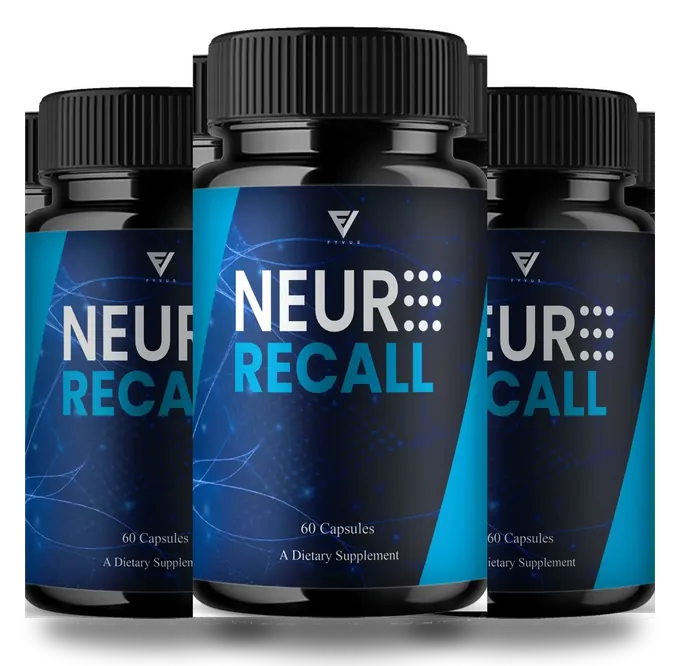
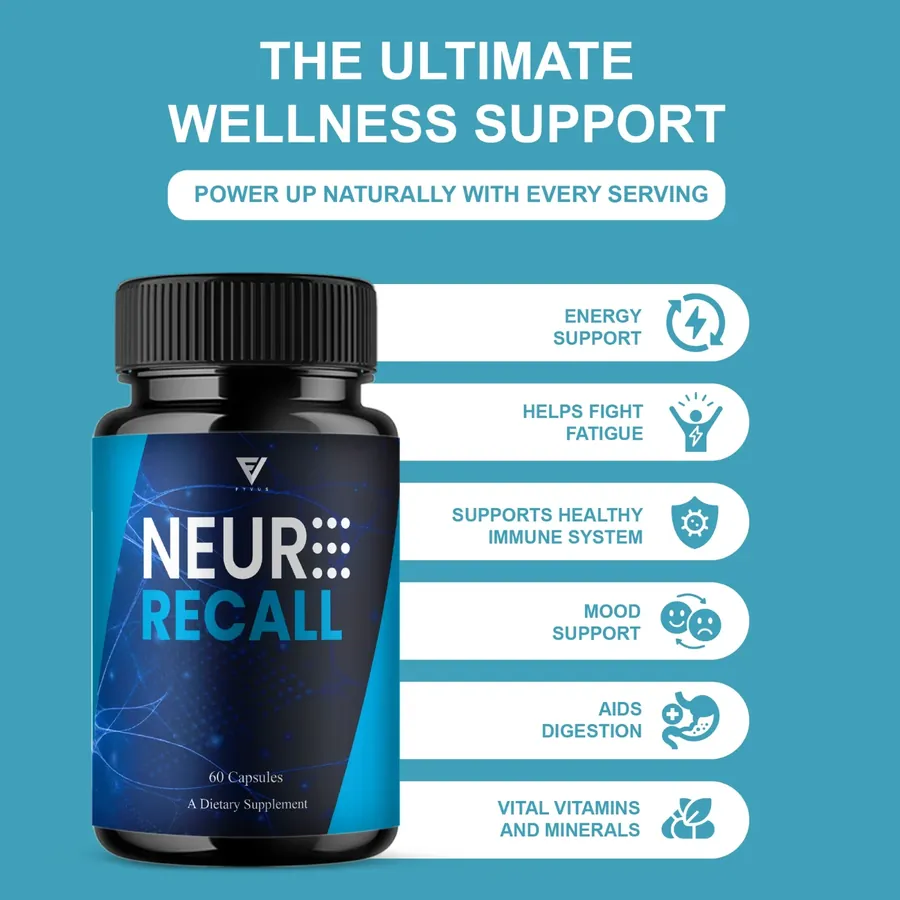
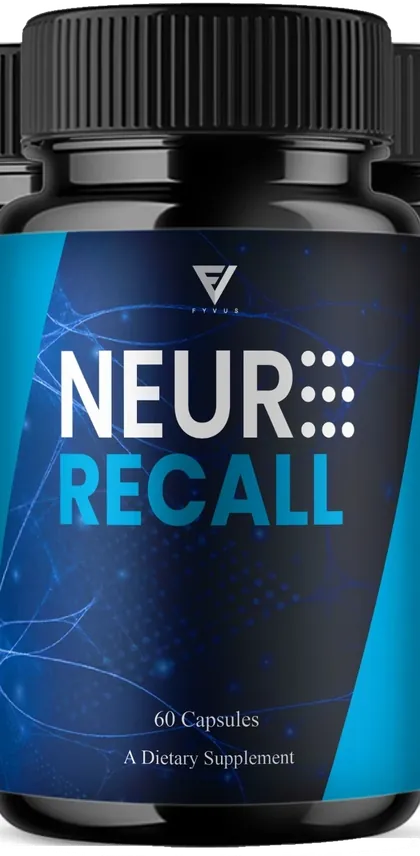
Neuro Recall is a capsule dietary supplement sold under the FYVUS brand mark. The idea is a steady daily routine: two capsules a day, every day, for weeks. It is not built to do anything in an hour or a day.
Each bottle holds 60 capsules. One serving is 2 capsules, so a bottle lasts 30 days. The capsules are gelatin, with rice flour and two common flow agents as fillers.
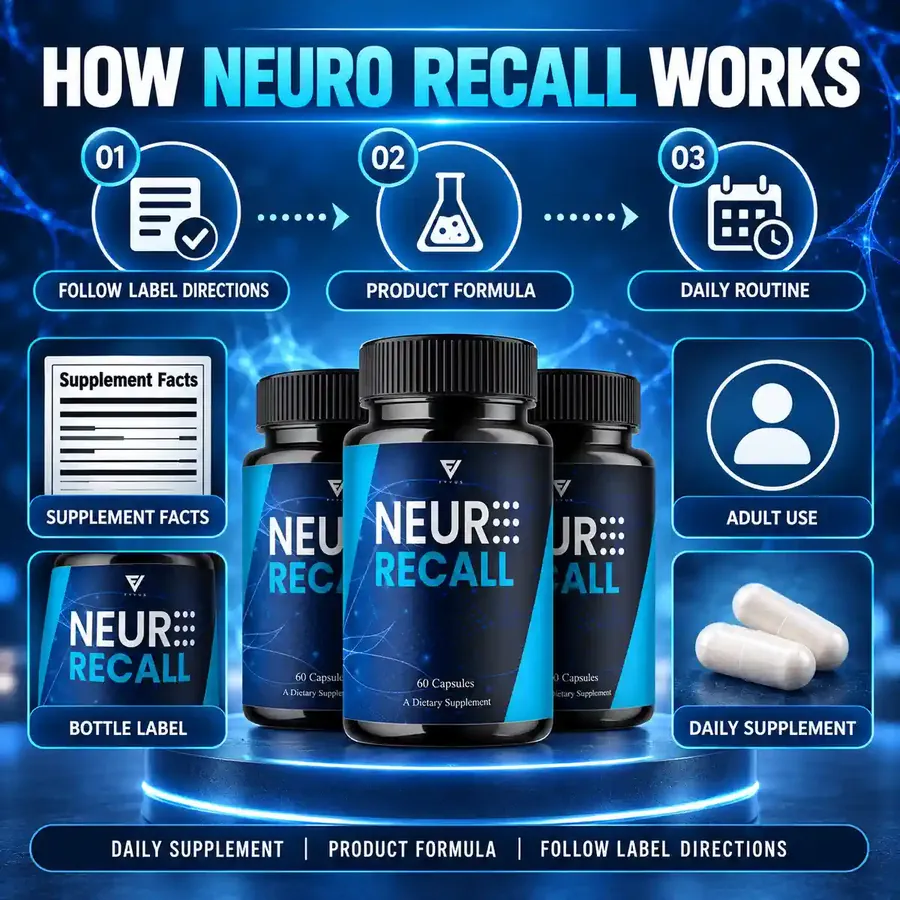
So what happens after you swallow the capsules? Nobody has measured that for this formula. No trial of Neuro Recall is public. The best we can do is read each label line and compare it with research on that ingredient alone, at the dose that research used.
The routine
How does the daily routine go?
Four simple steps, built from the label and the sales listing.
- 01
Take 2 capsules
One serving is 2 capsules, once a day. The label adds 'or as needed', but never more than the serving unless a clinician says so.
- 02
Pair it with a meal
The label sets no time. The eBay listing says after a meal, which can also ease stomach upset from magnesium.
- 03
Check your medicines
Chromium, berberine and ALA can add to diabetes drugs; ginkgo can add to blood thinners. Ask a pharmacist.
- 04
Review at 30 days
One bottle lasts 30 days. Note sleep, focus and any side effects, and bring the bottle to your next checkup.
The label says, word for word: "Take 2 capsules daily (or as needed) or as directed by your health care provider." It names no time of day. Practical tips, such as what to do after a missed day, are on how to take Neuro Recall.
The formula
What is inside each serving?
Two capsules hold 14 label lines. They fall into five loose groups. Each group plays a different part in the sales story and has a different level of proof.
Folate and vitamin B12
Printed amounts: folate 600 mcg DFE and B12 240 mcg. B12 is far above the daily need of 2.4 mcg, but the body absorbs only a small share of large doses (NIH ODS - Vitamin B12).
Magnesium and chromium
Magnesium 250 mg as oxide, a form the body absorbs less well (NIH ODS - Magnesium). Chromium 120 mcg, sold for blood sugar.
Cinnamon and berberine
Cinnamon is the first and heaviest blend line. With chromium, these three give the formula a clear blood sugar lean.
Ginkgo, bacopa, L-theanine, alpha-GPC
The lines most often sold for focus and memory. All sit inside the blend with no single amount printed.
Green tea, bilberry, ALA, lutein and zeaxanthin
Berry, tea and marigold extracts plus alpha-lipoic acid. Sold for antioxidant and eye support.
Every line has a short profile on the Neuro Recall ingredients hub, with links to nine in-depth pages.
Claimed vs known
What is each part claimed to do, and what is actually known?
The short version: most parts are sold for a job that research has not confirmed, or confirmed only at much larger doses. The table puts the marketing role next to what trusted sources say.
| Part | Usually sold for | What is known |
|---|---|---|
| Vitamin B12 and folate | Energy, nerves, memory | No gain in any thinking skill across 16 trials with 6,276 people, unless you are low (Markun 2021 - B12 & cognition meta-analysis) |
| Magnesium | Calm, muscles, sleep | Helps if your intake is low; oxide can loosen stools (NIH ODS - Magnesium) |
| Chromium, cinnamon, berberine | Blood sugar balance | Results inconsistent or limited (NIH ODS - Chromium)(NCCIH - Cinnamon)(MSK - Berberine) |
| Ginkgo | Memory, circulation | Did not prevent dementia in a six-year trial of 3,069 older adults (GEM trial (DeKosky 2008)) |
| Bacopa | Memory, learning | Modest attention gains at 300-450 mg a day for 12 weeks or more (Kongkeaw 2014 - Bacopa meta-analysis) |
| L-theanine | Calm focus | No clear overall effect in small trials (Matyus 2025 - L-theanine meta-analysis) |
| Alpha-GPC | Choline for the brain | Not tested for healthy people (AlzDiscovery - Alpha-GPC review) |
| Lutein and zeaxanthin | Eyes and brain | No effect on thinking scores over five years in AREDS2 (NEI/NIH - AREDS2 cognition result) |
Health claims should rest on good human trials of the same product at the same dose (FTC - Health Products Compliance Guidance). None exists for Neuro Recall. That does not prove it does nothing. It means no one has measured what it does.
The blend
How does the 635 mg blend split up?
Nobody outside the maker knows the exact split. The WMG-NVT Exclusive Blend prints one total, 635 mg, for ten lines. Federal rules let a blend list its parts from heaviest to lightest without single amounts (21 CFR 101.36 - proprietary blends).
That order still tells you something. Our own arithmetic: if line number k sits in position k, it can weigh no more than 635 divided by k. Ginkgo, in second place, can be at most about 318 mg. Bacopa, fourth, at most 159 mg. Alpha-GPC, ninth, at most 71 mg.
Blend per serving
One printed total shared by ten lines. No Daily Value is set.
Average per line
635 divided by 10. Some lines hold more, most probably less.
Bacopa ceiling
Trials used 300-450 mg a day (StatPearls - Bacopa monnieri), about twice the most this blend can hold.
These are ceilings, not real amounts. Because cinnamon comes first, it likely takes the largest share, leaving less room for the herbs sold for focus.
Neuro Recall: 5 bottles for $59.952 capsules a day · about $11.99 a bottle · free standard shipping · seller does not accept returns
View listingThe name
Where does the word "memory" come from?
It comes from the product name, the website domain and the eBay listing title, not from the label. The bottle front reads "60 capsules · A Dietary Supplement" and makes no benefit claim at all.
The brand's six panels stick to general wellness. They mention energy, mood, digestion, immune support, antioxidants, "mental clarity & focus" and "healthy aging". The listing calls it a "Memory Supplement". We think buyers should know that gap before they decide. The full side-by-side sits on Neuro Recall claims vs evidence.
Limits
What can Neuro Recall not do?
It cannot diagnose or treat memory loss, dementia or nerve damage. A product sold to treat a disease counts as a drug under FDA rules (FDA - Q&A on dietary supplements), and Neuro Recall is not one.
- It cannot find the cause of memory trouble. Low B12, thyroid problems and some medicines are common, testable causes (MedlinePlus - Memory loss).
- It cannot replace diabetes care, even with its blood sugar ingredients.
- It has no published trial, so no result can be promised.
- It does not replace sleep, movement and blood pressure care, which carry stronger proof.
Memory slips that get in the way of daily life, or numb and tingling hands or feet, deserve a medical check before any supplement. If you take blood thinners or diabetes medicine, ask a pharmacist too. The full list is on Neuro Recall side effects.
Bottom line
So how does Neuro Recall work, in short?
Neuro Recall is an easy two-capsule routine with a fully named label. Its vitamins and minerals are printed and within safety limits. Its herbs are hidden inside a small blend, most likely below trial doses. Treat it as a modest daily add-on you track, not as a fix.
FAQ
How Neuro Recall works: common questions
How is Neuro Recall supposed to work?
Neuro Recall is meant to work as a small daily add-on, not a medicine. Two capsules supply B12, folate, magnesium, chromium and a 635 mg herbal blend. The label names no mechanism and no target, and no study has tested the full formula, so its real effect is unknown.
Is Neuro Recall a medicine?
No. Neuro Recall is sold as a dietary supplement, and its label carries the FDA statement that it is not intended to diagnose, treat or prevent any disease. It cannot replace dementia care, nerve care, diabetes medicine or any prescription your doctor has given you.
Has any clinical trial studied Neuro Recall itself?
No published trial of Neuro Recall was found as of October 12, 2026. The studies we cite tested single ingredients, often at doses far above what the 635 mg blend can hold. Any claim about the whole formula is untested, so treat it with care.
Why does Neuro Recall contain cinnamon and berberine?
The label does not say why. Cinnamon, berberine and chromium are usually sold for blood sugar support, so the formula leans that way. Evidence for all three is limited or inconsistent, and together they may add to the effect of diabetes medicine, so ask your doctor first.
Will Neuro Recall keep me awake at night?
Probably not, but it may hold a little caffeine. Green tea leaf extract is one blend line, and green tea naturally carries caffeine. The label prints no caffeine amount. Green tea sits fifth in the blend, so it holds at most about 127 mg of extract, which suggests a small caffeine amount.
What does WMG-NVT Exclusive Blend mean?
It is the brand's name for the 635 mg proprietary blend in each two-capsule serving. The blend lists ten ingredients from heaviest to lightest but prints no single amounts. The letters are not explained anywhere on the label or the listing we reviewed.
Who wrote this
Written and reviewed by
Pages built from the bottle label, the sales listing and linked NIH, FDA, FTC and peer-reviewed sources.
Last updated . See our editorial standards and how we check reviews. This website is run by a U.S. stocking partner, not by the manufacturer. This site is paid a commission when you order through its links.
Keep reading
More about Neuro Recall
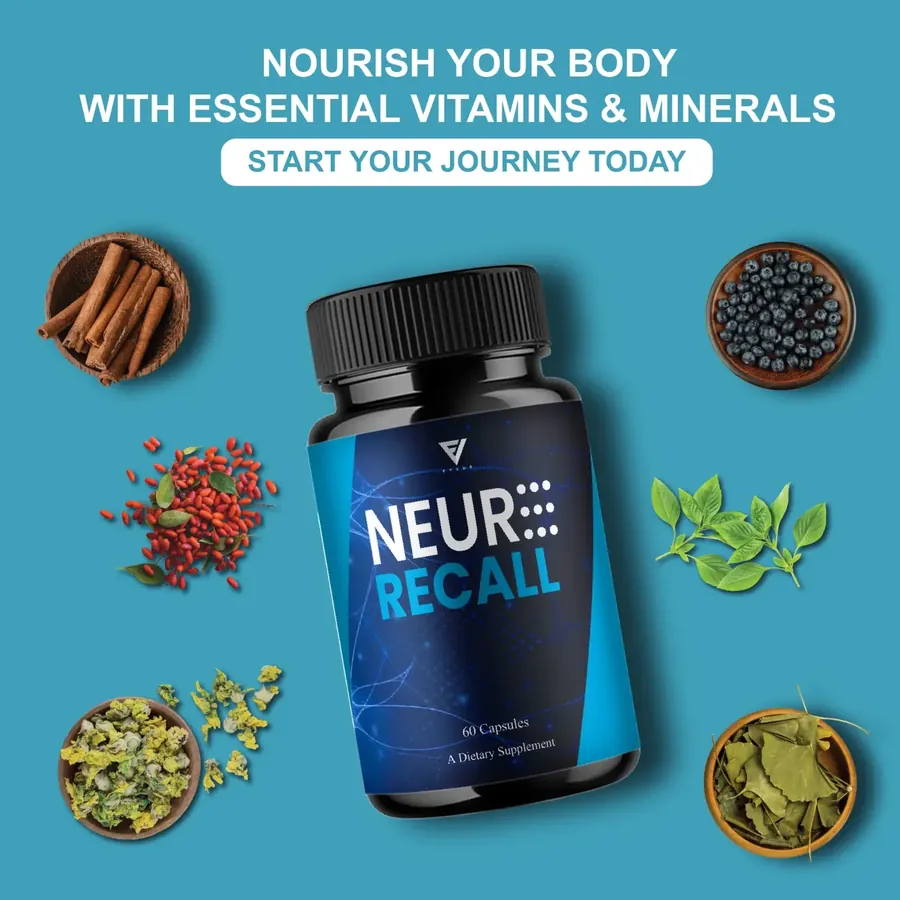
U.S. stocking partner for Neuro Recall
Ready to look at Neuro Recall?
Check the label, your medicines and the return terms first. The listing sells 5-bottle packs; buying more lowers the price per pack.
- Checkout on eBay
- Free standard shipping
- Read the return terms first